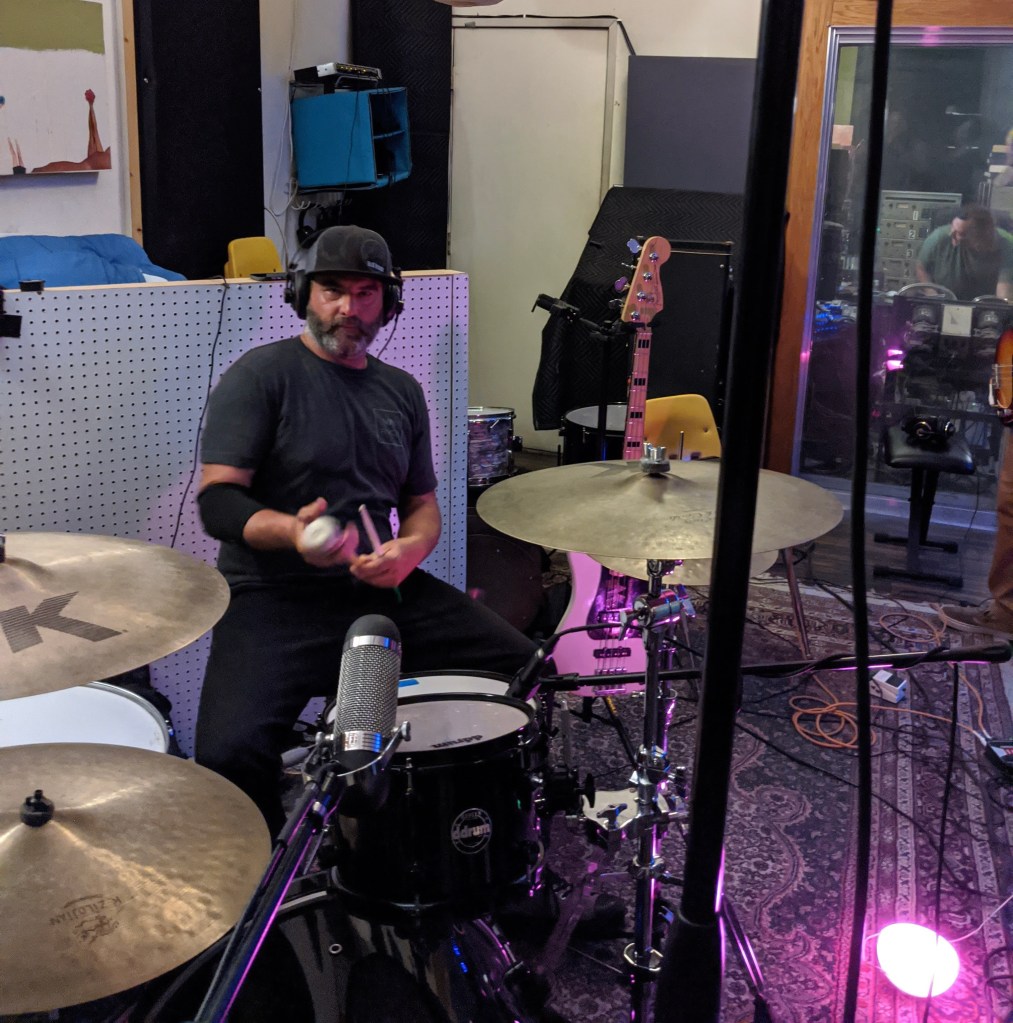
Mixing drums is hard. That’s because a) there are so many of them to deal with (snare, kick, hat, cymbals, toms, etc.), b) controlling bleed between the various parts of the kit can be challenging, and c) drums are central to any given song, and if they aren’t working, it can ruin the entire thing.
For me, mixing drums particularly hinges on how the snare sounds. It’s the organizing heartbeat of a song. You want to make it punchy, powerful and able to cut through the mix, but not so much that it interferes with the vocals and other instruments.
In the past, we recorded Lumpy (or engineer slash drummer Mike Kamoo) playing the entire kit, as is standard in rock recording. This was the approach we used for the first half of material of Exhaust as well.
However, in my last visit to Earthling, Mike and I tried another approach: isolating the kick and snare from the cymbals and hi hat. That is, we erected a little fort around the kick and snare and recorded them on their own, then recorded cymbals and hi hat separately later.
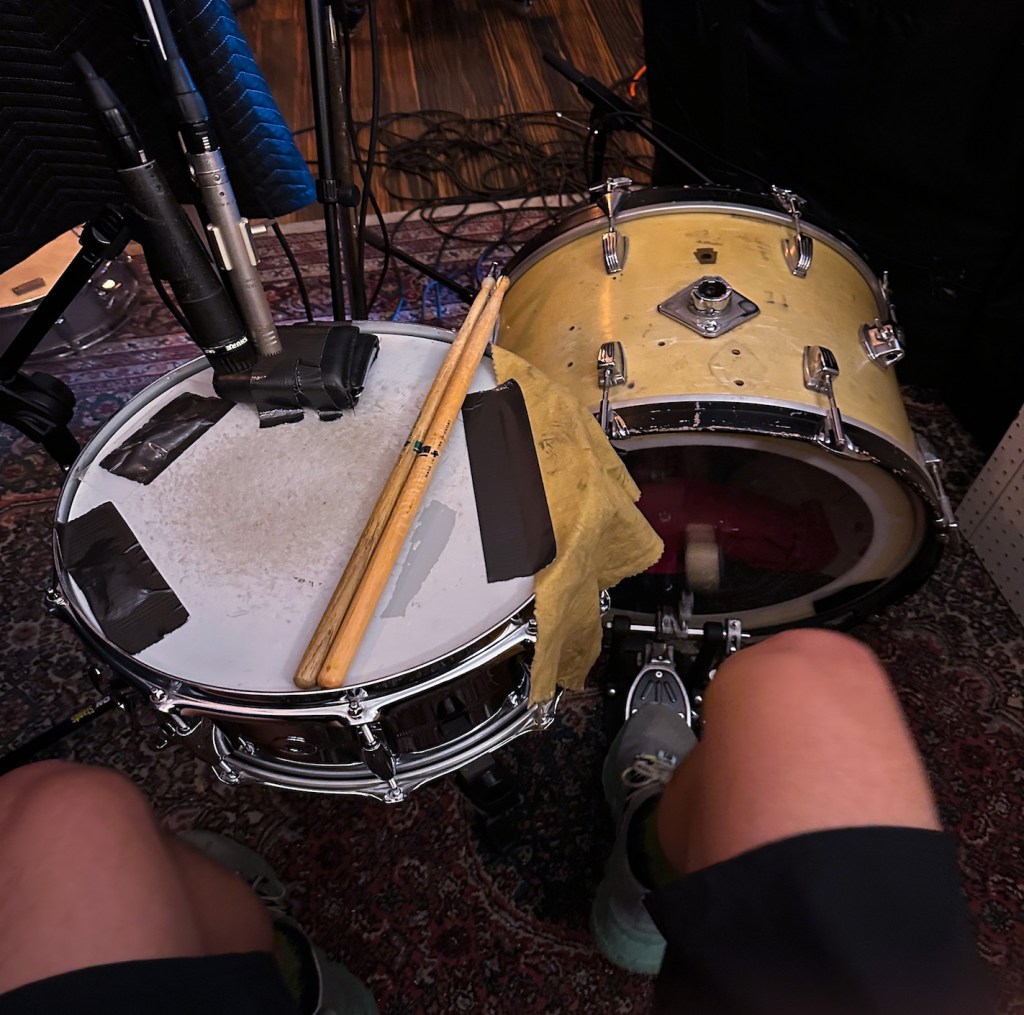
I found this new method better suited my mixing process, giving me much more control over the different parts of the kit—not to mention eliminating the major bleed issues of traditional rock drum recording.
I also started mixing in drum reverb from the very tail end of a drum machine snare hit sample—an old Mutt Lange trick I picked up from watching Dr. Bob’s Music Surgery YouTube channel—and began blending snares together in order to get both the crack and full-bottomed low end necessary for it to punch through.
As to whether the ultimate product of these efforts cuts it, that’ll be up to listeners to decide.
– Chris
 THE RIGHTOVERS